
 By
By 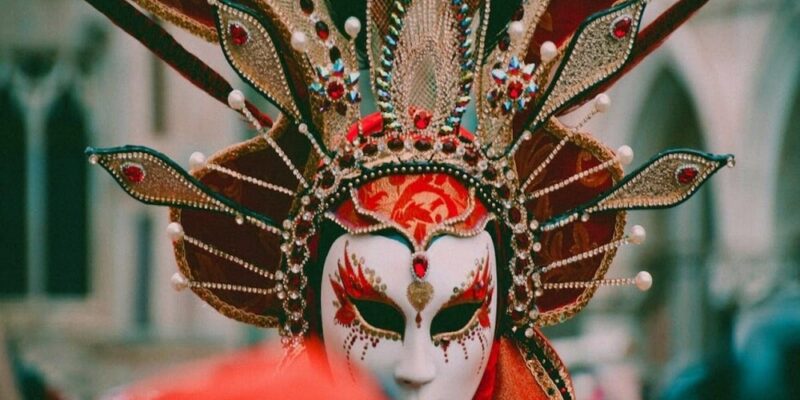
Introduction
The Venetian mask is one of the most popular symbols of Italian culture and tradition. Masks have a long history, dating back to the beautiful city of Venice, where they are linked to art, celebration, mystery and social freedom. venetian masks are still popular today for their elaborate designs, vibrant colors and opulent embellishment. They are particularly associated with the popular Venice Carnival, when people wear masks to take part in large celebrations and parades.
The Venetian Mask has a long history.
It is a tradition in Venice to wear masks, going back to the 13th century. Venice prospered and was a force of power during this time. The use of masks became popular because it enabled people to play around without being socially constrained and to interact freely with others while maintaining their privacy. The people from all social strata were able to interact socially without any fear of condemnation.
Festivals, parties and public gatherings were often accompanied by the use of masks. In Venice, over the years, the manufacture of masks took on the importance of a craft. Unique paper mache, feather, gold leaf and painted masks were hand-made by the skilled artisans called “mask makers”. The use of masks became very popular and they became a staple in Venetian culture.
The carnival tradition and Venetian masks.
Venetian masks have the closest association with the Venice Carnival, an old festival that occurs before the start of the Christian season of Lent. During the 17th and 18th centuries, the carnival was established as a popular spectacle with people donning fancy dresses and masks for weeks of fun and festivities.
The masks were designed to give anonymity so that people would have a sense of freedom from social rules and class differences. The public could enjoy feasts on an equal basis with nobles, merchants and common folk. The carnival started to incorporate elements of music, dancing, theatre and masquerade balls.
The Venice Carnival is still popular today and draws thousands of people annually. People wear traditional masks and costumes to celebrate the city’s artistic and cultural heritage.
There are many different types of traditional Venetian masks.
- Bauta
One of the most famous Venetian masks is the Bauta. It is long enough to cover the whole face and is usually accompanied by a black cloak and a hat. It enabled people to speak, eat and drink without identification.
- Colombina
The Colombina mask is worn on just the lower part of the face and is typically adorned with jewels, feathers and gold patterns. It is a graceful design and is worn by women during carnival.
- Medico della Peste
This mask with a long beak-like nose is also referred to as the Plague Doctor mask. This was inspired first by doctors treating victims in the plague outbreak in Europe.
Cultural Importance of Venetian Masks
Venetian masks are a symbol of freedom, creativity and equality. In the past, they gave individuals the freedom to break free from societal norms and openly communicate their wishes and thoughts. They also embody the artistic prowess of Venetian craftsmanship.
Today, these masks are important cultural symbols and popular souvenirs. They continue to inspire fashion, theatre, movies, and modern art worldwide.







Comments